Best Smart Lock UK 2026: What Works on British Doors
A 2026 guide to smart locks in the UK, covering euro cylinder and multipoint doors, TS007 security ratings, insurance, and five specific picks.

Best Smart Lock UK 2026: What Works on British Doors
Smart locks are the one category where American buying advice actively misleads British buyers. Most UK front doors — particularly uPVC and composite ones — use a multipoint locking mechanism driven by a euro profile cylinder, which is a fundamentally different arrangement from the deadbolts most smart locks were designed around. This guide is based on desk research: manufacturer specifications, retailer listings, and owner reviews on Amazon UK and Screwfix rather than first-hand testing. Below you will find a shortlist, a comparison table, notes on five specific locks, and an explanation of the door and insurance issues you need to settle before buying anything.
Quick Picks
| Best for | Model | Why we picked it |
|---|---|---|
| Best retrofit for euro cylinders | Nuki Smart Lock (Pro) | Fits over an existing euro cylinder thumbturn and drives multipoint doors properly. |
| Best full replacement | Yale Conexis L1 | A complete handle-and-lock unit designed specifically for UK multipoint doors. |
| Best budget retrofit | SwitchBot Lock | An inexpensive over-the-thumbturn design for straightforward cylinder locks. |
Comparison Table
| Model | Type | Fits UK multipoint? | Connectivity | Approx price |
|---|---|---|---|---|
| Nuki Smart Lock (Pro) | Retrofit over thumbturn | Yes, with correct cylinder | Bluetooth, Wi-Fi, Matter | around £180–£250 |
| Yale Conexis L1 | Full handle replacement | Yes, designed for it | Bluetooth, module for Wi-Fi | around £180–£230 |
| Yale Linus Smart Lock | Retrofit over thumbturn | Yes, with correct cylinder | Bluetooth, Wi-Fi bridge | around £180–£220 |
| SwitchBot Lock Ultra | Retrofit over thumbturn | Limited — check torque | Bluetooth, hub for remote | around £90–£150 |
| Aqara Smart Lock U50 | Retrofit / cylinder | Varies by door | Zigbee, hub required | around £150–£200 |
Prices are indicative and were correct at the time of writing. Smart locks are discounted frequently, so always check the current price and, more importantly, confirm compatibility with your specific door before you buy.
First: What Kind of Door Do You Have?
This determines everything, so work it out before you look at any product.
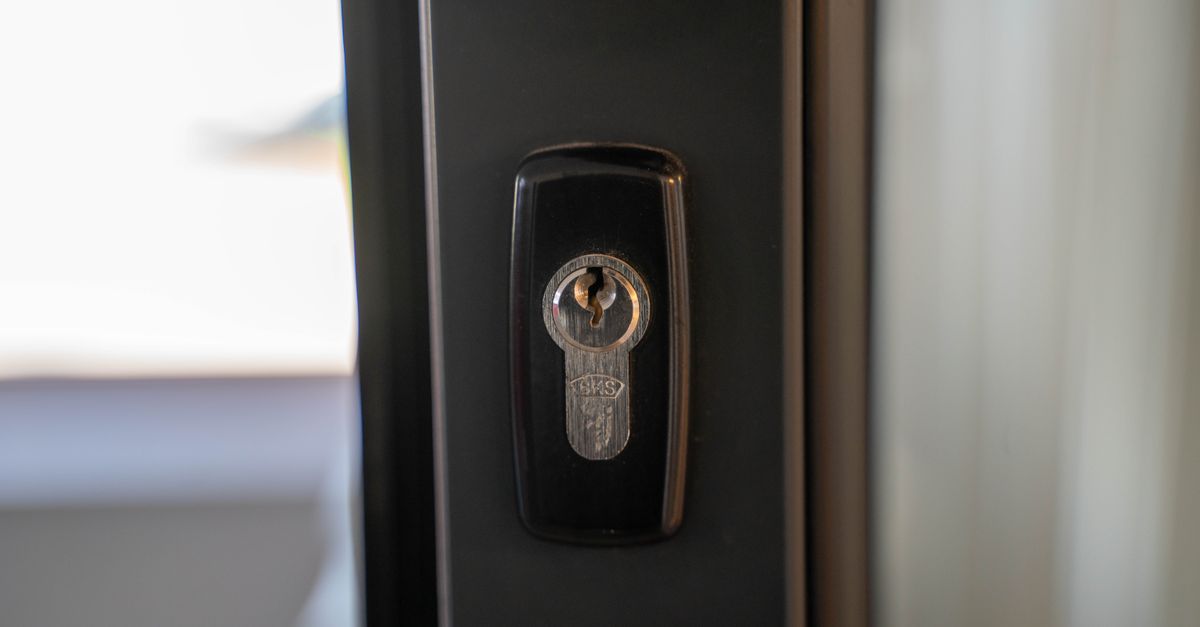
uPVC or composite door with a multipoint lock. This is the most common UK front door. Lifting the handle throws several bolts up and down the door edge, and turning the key in a euro profile cylinder locks them in place. Most smart locks that work here are retrofit units that mount over the inside thumbturn and rotate it, or full handle replacements such as the Yale Conexis L1.
The critical detail is that multipoint mechanisms need meaningful torque to drive, considerably more than a simple deadbolt. A cheap retrofit motor may struggle, especially if the door has dropped slightly on its hinges and the mechanism binds. If your door is stiff to lock by hand, fix that before adding a motor — it will only get worse.
You will also usually need a euro cylinder with a thumbturn inside and, for most retrofit locks, one that allows the key to turn from outside while the thumbturn is engaged (often described as an “emergency function” or “both sides” cylinder). Many stock cylinders do not, so budget for a replacement cylinder.
Timber door with a nightlatch and a mortice deadlock. Common on older British houses. A Yale-type nightlatch on the inside can sometimes be replaced with a smart nightlatch, but the separate BS3621 mortice deadlock below it — the one your insurer probably cares about — cannot be automated by most consumer products.
Timber door with a euro cylinder. Treated much like the uPVC case above.
If you rent, note that most retrofit locks mount with adhesive or a small bracket over the existing thumbturn and require no permanent change to the door, which usually makes them acceptable. Full replacements such as the Conexis do change the door furniture and will need the landlord’s agreement.
Security Standards and Insurance — Do Not Skip This
This is where British buyers get caught out.
Most home insurance policies specify a minimum lock standard for external doors, commonly BS3621 for mortice locks and nightlatches. For euro cylinders, the relevant standards are TS007 (a star rating, where 3 stars is the target) and Sold Secure Diamond. These exist largely to resist lock snapping, an attack in which a euro cylinder is snapped in half to expose the mechanism, which was for years the dominant method of forced entry through uPVC doors in the UK.
Two practical consequences:
- A retrofit smart lock does not change your cylinder’s security rating — it just turns the thumbturn. If your existing cylinder is an unrated builder’s-standard part, adding a smart lock leaves the snapping vulnerability entirely intact. Fitting a TS007 3-star or Sold Secure Diamond anti-snap cylinder is a cheaper and more meaningful security upgrade than any smart lock, and many people should do that first.
- Check your policy wording before you fit anything. Some insurers have specific requirements about key-operable locks on final exit doors. A lock that can only be opened by phone may not satisfy a policy that requires a key-operated deadlock, and a claim following a break-in is a bad time to discover this. If in doubt, ring them and get the answer in writing.
Also worth considering: a smart lock introduces failure modes a mechanical lock does not have — flat batteries, firmware faults, and a dependence on the manufacturer’s servers for remote features. Every lock here retains physical key operation, and you should keep a key accessible.
The Best Smart Locks in Detail
Nuki Smart Lock — the strongest choice for multipoint doors
The Nuki Smart Lock, from an Austrian manufacturer, is the retrofit most often recommended for European-style doors, and the reason is torque. According to Nuki, the lock mounts over the inside thumbturn of a euro cylinder and is engineered to drive the heavier multipoint mechanisms common across Europe and the UK, rather than the lighter deadbolts typical of North American designs.
Recent generations added Matter and Thread support alongside Bluetooth and Wi-Fi, meaning it can be brought into Apple Home, Google Home, Alexa, or Home Assistant without depending solely on Nuki’s own cloud. It supports auto-unlock on approach, remote access, and timed access for visitors.
The practical requirements are worth restating: you need a euro cylinder with a thumbturn inside, and ideally one that permits the key to operate from outside while the thumbturn is fitted. Owner reviews are generally strong on reliability and on the fact that it handles stiff doors better than cheaper rivals, with the most common complaints being size — it is a noticeably bulky unit on the inside of the door — and price. Expect around £180 to £250 at the time of writing, depending on version.
Yale Conexis L1 — designed for UK doors from the start
The Yale Conexis L1 takes the opposite approach: rather than sitting over an existing cylinder, it replaces the entire door handle assembly on a uPVC or composite multipoint door.
Because it was designed specifically for this door type, the fit and drive are properly matched, and there is no question of the motor struggling with a mechanism it was not built for. It opens via phone, supplied key tags, key cards, or a fob, and a module can be added for remote access. Yale is also a brand British insurers recognise, which can simplify conversations about policy compliance.
Two things to understand. First, this is a bigger job than a retrofit — you are removing and replacing the handle, and the door must have a compatible multipoint mechanism and backset. Second, some versions do not include a conventional external keyhole, which is precisely the point of the design but may be an issue for insurance or for anyone who wants a mechanical fallback. Check the specific variant carefully. Owner reviews rate the build and integration highly while noting the app has historically been a weak point. Expect around £180 to £230 at the time of writing.
Yale Linus Smart Lock — Yale’s retrofit answer
The Yale Linus is closer in concept to the Nuki: a motorised unit that mounts over the inside thumbturn of a euro cylinder, leaving the external appearance of the door unchanged.
It suits people who want a recognisable brand and a retrofit rather than a replacement, and it is a sensible option for renters or anyone unwilling to change the door furniture. Connectivity is Bluetooth with an optional bridge for remote access, and it integrates with the main voice assistants.
The same cylinder requirements apply as for the Nuki — a thumbturn inside, and preferably a cylinder that allows external key use with the thumbturn engaged. Owner reviews are broadly positive on installation simplicity, with some reports of struggles on stiff or misaligned doors, which is the recurring theme for every retrofit lock. Expect around £180 to £220 at the time of writing.
SwitchBot Lock Ultra — the budget retrofit
SwitchBot built its reputation on inexpensive retrofit automation, and its lock applies the same philosophy: a compact motorised unit that mounts over the thumbturn, usually with adhesive, and turns it.
The appeal is price and reversibility. It is substantially cheaper than the alternatives, requires no modification to the door, and can be removed without trace — which makes it attractive to renters. A separate hub is needed for remote access and voice control; on its own it is Bluetooth-only.
The caution is torque. SwitchBot’s locks were designed primarily around simpler cylinder and deadbolt arrangements, and owner reviews include a meaningful number of reports of the motor struggling on heavier UK multipoint doors, particularly where the door has dropped or the mechanism is stiff. Adhesive mounting also relies on a clean, flat surface and can fail over time under repeated load. If your door locks smoothly with one finger on the thumbturn, this is worth trying; if it needs a firm turn, buy something stronger. Expect around £90 to £150 at the time of writing.
Aqara Smart Lock U50 — for an existing Zigbee setup
Aqara makes sense mainly for people already running an Aqara or Zigbee ecosystem, since its locks depend on an Aqara hub. Within that context the U50 offers keypad and fingerprint entry alongside app control, and integrates neatly with Aqara sensors and automations.
The reason it sits last here is UK door compatibility, which varies considerably across Aqara’s lock range and across door types. Aqara’s designs originate in markets with different standard door hardware, and not every model suits a British multipoint arrangement. Some variants need a specific cylinder or a particular backset.
Anyone considering one should check the compatibility documentation against their exact door and cylinder before ordering, and treat “works with euro cylinders” as a claim to verify rather than assume. Owner reviews from UK buyers are mixed largely along these lines — very positive where the door suited it, frustrated where it did not. Expect around £150 to £200 at the time of writing.
Practical Advice Before You Buy
- Fix the door first. If it needs lifting or shoving to lock, a motor will struggle and eventually fail. Adjust the hinges or have the mechanism serviced before automating it.
- Upgrade the cylinder. A TS007 3-star or Sold Secure Diamond anti-snap cylinder addresses the most common real-world attack on UK doors, and costs far less than a smart lock.
- Check the cylinder allows external key use. Many retrofit locks need a cylinder that lets the key turn from outside while the thumbturn is engaged inside. Standard cylinders often do not.
- Keep a physical key. Batteries fail, and they tend to fail at the least convenient moment. Every lock here retains key operation — keep one with someone you trust.
- Confirm with your insurer. Get any answer about policy compliance in writing before you rely on it.
- Consider what happens if the company disappears. Locks that depend entirely on a manufacturer’s cloud can lose remote features overnight. Local control via Matter, Thread, Zigbee, or Home Assistant is more durable.
FAQ
Will a smart lock work on a UK uPVC door? Usually yes, but only with the right type. Most UK uPVC and composite doors use a multipoint mechanism driven by a euro cylinder, which needs considerably more torque than the deadbolts many smart locks were designed for. Look for either a retrofit lock explicitly rated for European multipoint doors, such as the Nuki, or a full replacement designed for UK doors, such as the Yale Conexis L1. You will also generally need a euro cylinder with a thumbturn on the inside.
Do smart locks affect home insurance? They can, so check your policy before fitting one. Many UK policies specify lock standards such as BS3621 for final exit doors, and some require a key-operable lock. A retrofit smart lock does not change the security rating of the cylinder it sits on, so it neither helps nor harms that rating by itself — but a full replacement that removes the external keyhole might conflict with policy wording. Ring your insurer and get the answer in writing rather than assuming.
What happens if the batteries die? Every lock covered here retains mechanical key operation, so a flat battery leaves you able to get in with a key rather than locked out. Most give ample warning through the app and audible alerts, and typical battery life runs from several months to around a year depending on use. The sensible precautions are to keep a physical key accessible, to avoid ignoring low-battery warnings, and to make sure at least one other household member can get in without the app.
Are smart locks less secure than normal locks? The bigger risk on a British door is usually mechanical rather than digital. Lock snapping of an unrated euro cylinder remains a far more common attack than any electronic compromise, which is why fitting a TS007 3-star or Sold Secure Diamond cylinder matters more than the smart features on top of it. That said, a smart lock does add failure modes — flat batteries, firmware bugs, and reliance on a manufacturer’s servers — so choose one with local control and keep a mechanical key as a fallback.