Do Smart Toilets Need Plumbing UK: What Actually Has to Change
What plumbing a smart toilet actually needs — the cistern tee for a seat, the soil pipe for a full unit, and the pressure spec that catches people out.
Do Smart Toilets Need Plumbing UK: What Actually Has to Change
The plumbing is the easy part. People worry about it and then discover the real obstacle is electrical — but there are a few plumbing details that decide whether a smart toilet works properly in your house, and one of them, water pressure, is invisible until the wash disappoints. This guide is based on desk research: manufacturer specifications and UK retailer listings rather than first-hand testing. Below you will find exactly what changes for a seat versus a full unit, and the checks worth doing first.
Quick Reference
| Bidet seat | Full smart toilet | |
|---|---|---|
| Water supply | T-piece on the cold feed to the cistern | Standard cold feed |
| Waste / soil pipe | No change | Standard connection; may move |
| Cistern | Keep existing | Replaced, often concealed in a frame |
| Typical plumbing time | About 15 minutes | A bathroom job |
| Hot water needed? | No — it heats cold water itself | No |
A Bidet Seat: One Connection
For a seat retrofitted to your existing pan, the plumbing is genuinely a single job.
The seat comes with a T-piece that goes into the cold water feed to your cistern. Turn off the isolation valve, disconnect the flexible tail, fit the tee, reconnect the cistern on one branch and run the supplied hose to the seat on the other. Fifteen minutes with an adjustable spanner, and many people do it themselves.
Points worth knowing:
There is no hot water connection. Electric seats heat cold water themselves. This surprises people who assume a warm wash means a hot feed — it does not, and running one off the hot supply is not how they are designed.
The waste is unchanged. Wash water goes into the pan. Nothing about your soil pipe changes.
There is no separate waste like a traditional bidet. That is precisely why a seat fits where a bidet fixture would not.
You need an isolation valve on the cistern feed. Most modern installations have one; older ones sometimes do not, and adding it is a small job worth doing anyway.
A Full Smart Toilet: A Bathroom Job
Replacing the pan is a different scale of work.
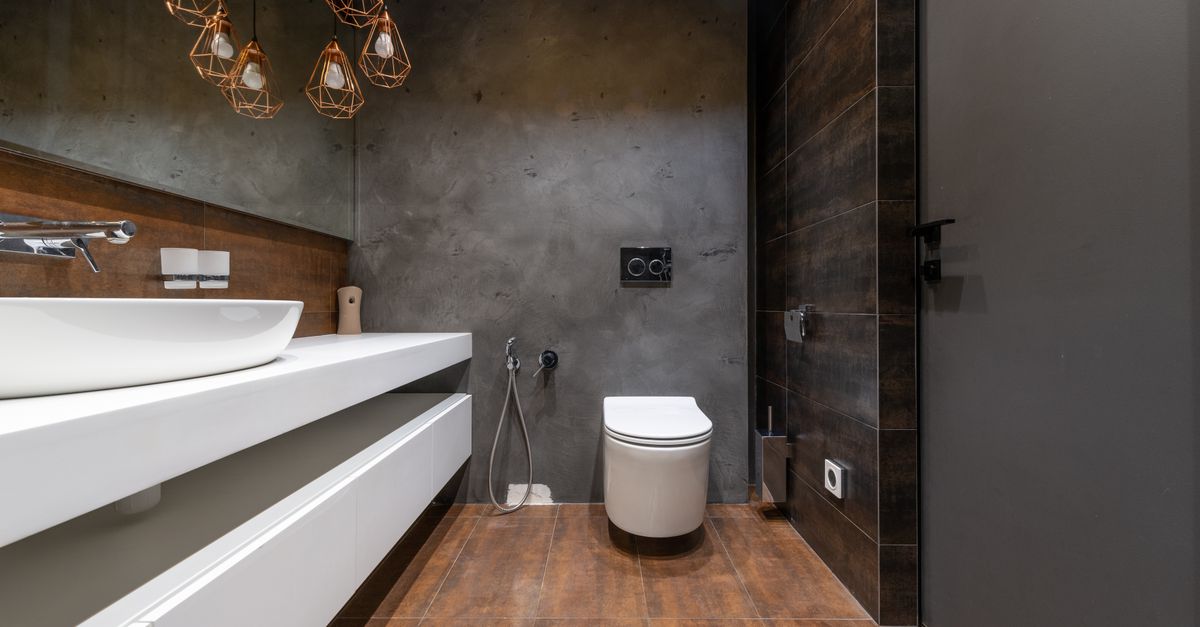
Soil connection. Standard, but the new pan’s outlet position may not match the old one, which means an adaptor or moving the connection. Wall-hung units use a frame that carries the pan and conceals the cistern, and that frame has to be fixed into a wall that can take it — a stud wall may need reinforcing.
Cistern. Usually replaced with a concealed unit inside the frame, with a flush plate on the wall.
Tiling and making good. The old pan’s footprint rarely matches the new one. This is where the cost and the mess live, and it is the main reason a full smart toilet makes far more sense during a refit than as a standalone job.
The Check People Skip: Water Pressure
This is the one that produces a disappointing result rather than an obvious failure.
Some electric seats specify a minimum inlet pressure, and on an old gravity-fed system — a cold tank in the loft feeding the bathroom — the pressure at the toilet can be well below what the seat wants. The seat works, but the wash is feeble.
Two questions worth answering before buying:
- Is your cold supply mains-fed or gravity-fed? A combi boiler generally means mains pressure throughout. A hot water cylinder plus a loft tank often means gravity on the cold side upstairs.
- What does the seat’s spec sheet say? Reputable manufacturers publish a minimum pressure. Compare the two rather than hoping.
If you are on gravity, look specifically for a model rated for low pressure, or consider a pump — though at that point the economics start favouring a different approach.
Water Hardness
Not plumbing exactly, but it belongs in the same conversation. Much of the UK is hard-water country, and scale on the nozzle and heating element is the main long-term killer of these products. Choose a model with a descale cycle and actually run it. If you already have a water softener, this is much less of an issue.
What About a Traditional Bidet?
For completeness, since it is the alternative people compare against: a separate bidet fixture needs hot and cold supplies and its own waste connection, which is real plumbing and real floor space. That combination is why bidets are rare in modern British bathrooms and why the seat has largely replaced them — the seat gets the same function from one cold tee.
Sequence If You Are Doing Both
If you are fitting an electric seat, the sensible order is:
- Measure the pan shape, seat bolt centres and clearance behind the pan.
- Get the electrician’s quote for a fused connection unit before buying anything.
- Check the pressure spec against your system.
- Buy the seat.
- Electrician fits the flex outlet; you or a plumber fit the tee and the seat.
Doing it in that order avoids the common outcome of an unopened box and a quote you did not expect.
FAQ
Do smart toilets need special plumbing? No. A bidet seat needs one connection — a T-piece on the existing cold feed to the cistern, about fifteen minutes’ work — and no change to the waste at all. A full smart toilet uses a standard soil connection like any pan, though replacing the pan usually means tiling and making good, which is why it suits a refit.
Do smart toilets need a hot water supply? No. Electric seats and smart toilets heat cold water themselves, either from a small reservoir or on demand. There is no hot feed, and they are not designed to run off one. Non-electric mechanical seats do not heat at all and give a cold wash.
Will a bidet seat work on low water pressure? Not always well. Some electric seats specify a minimum inlet pressure and give a weak wash on an old gravity-fed system with a loft tank. Check whether your cold supply is mains-fed or gravity-fed, compare it against the model’s published minimum, and look for a low-pressure-rated model if you are on gravity.
Can I fit the plumbing for a bidet seat myself? The water side, usually yes — it is a supplied T-piece on the cistern feed with an isolation valve, and no waste work. The electrical side is not DIY in a UK bathroom: it needs a fused connection unit fitted by a qualified electrician, and that is notifiable work.